
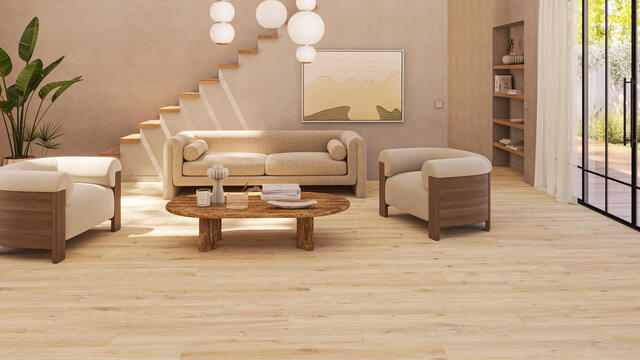

Choosing the right flooring for a home renovation involves balancing style, durability, maintenance, and budget. Among the wide array of modern surface options, laminate flooring remains one of the most widely selected products for residential interiors. Originally introduced as an affordable alternative to traditional hardwood, laminate technology has evolved significantly over recent decades. Today, high-definition printing and advanced embossing techniques allow laminate to mimic natural oak, walnut, stone, and tile with remarkable visual fidelity.
Navigating the various flooring types requires understanding how laminate is constructed, where it performs best, and where its physical boundaries lie. This guide breaks down the structural makeup of laminate flooring, its main benefits and drawbacks, comparisons with competing materials, and essential installation considerations.
What Is Laminate Flooring?
Laminate flooring is a multi-layer synthetic flooring product fused together through a lamination process. Designed to offer the visual character of natural surfaces while keeping material costs low, each plank consists of four distinct structural layers.
-
Wear Layer: The topmost surface consists of a clear resin coating, usually made from aluminum oxide or melamine. This tough transparent shield protects the plank against daily foot traffic, fading from ultraviolet light, scratches, and household stains.
-
Design Layer: Directly beneath the wear layer is a high-resolution photographic print. This image creates the visual appearance of real hardwood planks, natural slate, marble, or distressed timber, often enhanced with register-embossed textures that align with the printed grain pattern.
-
Core Layer: The structural center of the plank is made from high-density fiberboard (HDF). Engineered from compressed wood fibers and synthetic resins, this thick core gives the plank its dimensional stability, structural rigidity, and impact resistance.
-
Backing Layer: The bottom layer serves as a stabilizing barrier against moisture rising from the subfloor. It balances the plank to prevent warping, cupping, or twisting over time.
Most modern laminate planks feature precision-milled tongue-and-groove edges designed for a floating installation. This mechanism allows the planks to interlock securely without needing glue, nails, or staples attached directly to the underlying floor.
Core Advantages of Laminate Flooring
Homeowners and builders routinely select laminate flooring due to its practical utility and competitive pricing. Understanding these primary strengths helps clarify why it remains a popular choice across residential projects.
Exceptional Scratch and Wear Resistance
The outer aluminum oxide coating makes laminate far more resistant to surface abrasion than traditional solid hardwood or soft vinyl. High-density wear layers withstand pet claws, dragged furniture legs, high heels, and heavy foot traffic without showing immediate wear. For households with active children or large dogs, laminate offers reliable surface protection against daily scuffs.
Budget-Friendly Material and Installation Costs
Compared to authentic hardwood, natural stone, or ceramic tile, laminate provides a similar aesthetic at a fraction of the cost per square foot. Beyond lower retail prices, the interlocking click-lock mechanism drastically lowers labor expenses. Experienced DIY enthusiasts can often install floating laminate floors independently, eliminating professional installation fees altogether.
Broad Aesthetic Range and Authentic Textures
Advances in digital printing have eliminated the repetitive pattern issues seen in early laminate generations. Modern collections offer realistic knot details, rustic hand-scraped finishes, matte topcoats, and wide-plank formats that rival high-end timber. Options range from traditional domestic hardwoods like oak and maple to exotic species like teak and Brazilian cherry.
Easy Maintenance and Cleaning
Maintaining laminate flooring requires minimal effort compared to materials that demand periodic waxing, oiling, or deep grout cleaning. Regular sweeping, vacuuming using a hard-floor setting, and occasional damp mopping with a designated laminate cleaner are generally sufficient to keep the surface pristine.
Fade and Stain Resistance
Unlike real timber, which darkens or changes color under direct sunlight, the protective wear layer on laminate resists UV rays. It also prevents household spills like red wine, coffee, and ink from soaking into the material, allowing for stress-free cleanup when messes are tackled promptly.
Key Disadvantages and Limitations
Despite its many advantages, laminate flooring is not suitable for every room or application. Evaluating its inherent limitations ensures long-term satisfaction with your investment.
Susceptibility to Water and Moisture Damage
While the top surface resists liquid spills briefly, the high-density fiberboard core is sensitive to moisture. Standing water that seeps into plank joints can cause the fiberboard to swell, buckle, and delaminate. Although water-resistant and waterproof laminate products have emerged in recent years, traditional laminate is unsuitable for wet environments like full bathrooms, saunas, or unconditioned basements prone to flooding.
Inability to Be Refinished
Solid hardwood floors can be sanded down, repaired, and refinished multiple times over several decades. Laminate floors cannot be refinished. If the wear layer wears through or the surface suffers deep gouges, individual damaged planks must be replaced, or the entire floor must be removed and re-laid.
Rigid Underfoot Feel and Acoustic Hollow Sound
Laminate is a rigid floating floor that rests on top of an underlayment rather than being fastened to the subfloor. As a result, walking on laminate in hard-soled shoes can produce a hollow, clicking sound. Without a dense, high-quality acoustic underlayment, the floor may feel firmer and colder underfoot than carpet, cork, or luxury vinyl.
Lower Resale Value Impact
While laminate upgrades can improve a home’s appearance, real estate market evaluations generally favor authentic hardwood or high-end engineered timber. Prospective buyers often perceive hardwood as a permanent luxury upgrade, whereas laminate is recognized as a budget-conscious, mid-tier choice.
Laminate Flooring vs. Popular Alternatives
Comparing laminate to other common flooring categories helps highlight its distinct positioning in the market.
| Feature | Laminate Flooring | Luxury Vinyl Plank (LVP) | Solid Hardwood |
| Primary Material | High-Density Fiberboard | Polyvinyl Chloride (PVC) | Natural Solid Wood |
| Water Resistance | Moderate to High (Topical) | 100% Waterproof | Low (Swells with Water) |
| Scratch Resistance | Very High | High | Moderate (Prone to Dents) |
| Lifespan | 15 to 25 Years | 20 to 25 Years | 50 to 100+ Years |
| Refinishing | No | No | Yes (Multiple Times) |
| Average Cost | Budget to Mid-Range | Mid-Range | High to Premium |
Essential Installation and Subfloor Considerations
Achieving a durable laminate installation relies heavily on proper subfloor preparation and environmental control before laying down planks.
Subfloor Flatness and Moisture Testing
Because laminate planks float over the subfloor, any bumps, dips, or structural imperfections in the subfloor will translate to movement underfoot. Subfloors must be clean, structurally sound, and flat within a strict tolerance (typically 3/16 inch over a 10-foot radius). On concrete subfloors, a vapor barrier film is mandatory to prevent ground moisture from entering the HDF core.
Material Acclimation
Laminate planks expand and contract in response to changes in room temperature and relative humidity. Before installation, unopened boxes of laminate must sit flat in the room where they will be installed for at least 48 hours. This acclimation period stabilizes the planks, preventing post-installation buckling or seam separation.
Expansion Gaps
During installation, a perimeter expansion gap of roughly 1/4 inch to 3/8 inch must be left around all walls, door frames, and permanent fixtures. This space allows the floating floor to expand naturally with seasonal climate shifts. The gap is subsequently covered by baseboards or quarter-round moldings.
Frequently Asked Questions
Can laminate flooring be installed over existing radiant heating systems?
Yes, many modern laminate floors are compatible with hydronic or electric radiant heating systems. However, the heating elements must be embedded beneath the subfloor, and the surface temperature should not exceed 82 degrees Fahrenheit (28 degrees Celsius). Always check the manufacturer guidelines to verify radiant heat approval and ensure a gradual temperature warm-up process to avoid thermal shock.
How do AC ratings determine the durability and placement of laminate flooring?
The Abrasion Criteria (AC) rating measures a laminate floor’s resistance to wear, impact, and staining on a scale from AC1 to AC6. For standard residential bedrooms and dining areas, AC3 is sufficient. For heavy residential traffic areas like hallways, kitchens, and living rooms, or light commercial spaces, AC4 or AC5 rated laminate is recommended for long-term durability.
Is laminate flooring safe for homes with heavy indoor pets or large dogs?
Laminate flooring is generally very pet-friendly due to its tough, scratch-resistant wear layer, which resists claw marks better than traditional hardwood finishes. However, pet accidents must be wiped up immediately to prevent liquid from seeping into plank seams and causing the underlying core to swell. Texture-embossed finishes also provide better traction for pets compared to slick, high-gloss finishes.
What is the average lifespan of modern laminate flooring under normal residential use?
When properly maintained and kept free of standing water, quality residential laminate flooring typically lasts between 15 and 25 years. Lower-grade thin laminates in high-traffic areas may show wear in 7 to 10 years, while premium thick options with high AC ratings can remain in excellent condition for nearly 30 years.
How can homeowners reduce or eliminate the hollow clicking noise when walking on laminate?
The hollow sound associated with laminate flooring can be significantly reduced by installing a high-density acoustic underlayment, such as cork, rubberized foam, or heavy felt, prior to laying the planks. Ensuring the subfloor is completely level before installation also prevents minor air pockets that amplify footstep noise.
Can individual damaged laminate planks be replaced without tearing up the entire floor?
Yes, individual damaged planks can be replaced. If the damage occurs near a room’s perimeter, baseboards can be removed to unlock planks back to the affected board. If the damage is in the middle of a large room, professionals use a plunge saw to carefully cut out the damaged plank, trim the locking tongue on the replacement board, and glue the new plank securely into place.
What specific underlayment density is required when installing laminate over concrete subfloors?
When installing laminate over concrete subfloors, you must use a vapor barrier alongside an underlayment. A combined underlayment with an integrated 6-mil polyethylene moisture barrier is standard practice. Foam underlayment density typically ranges between 2 lb to 4 lb per cubic foot to provide proper cushioning, thermal resistance, and moisture protection.

Comments are closed.