
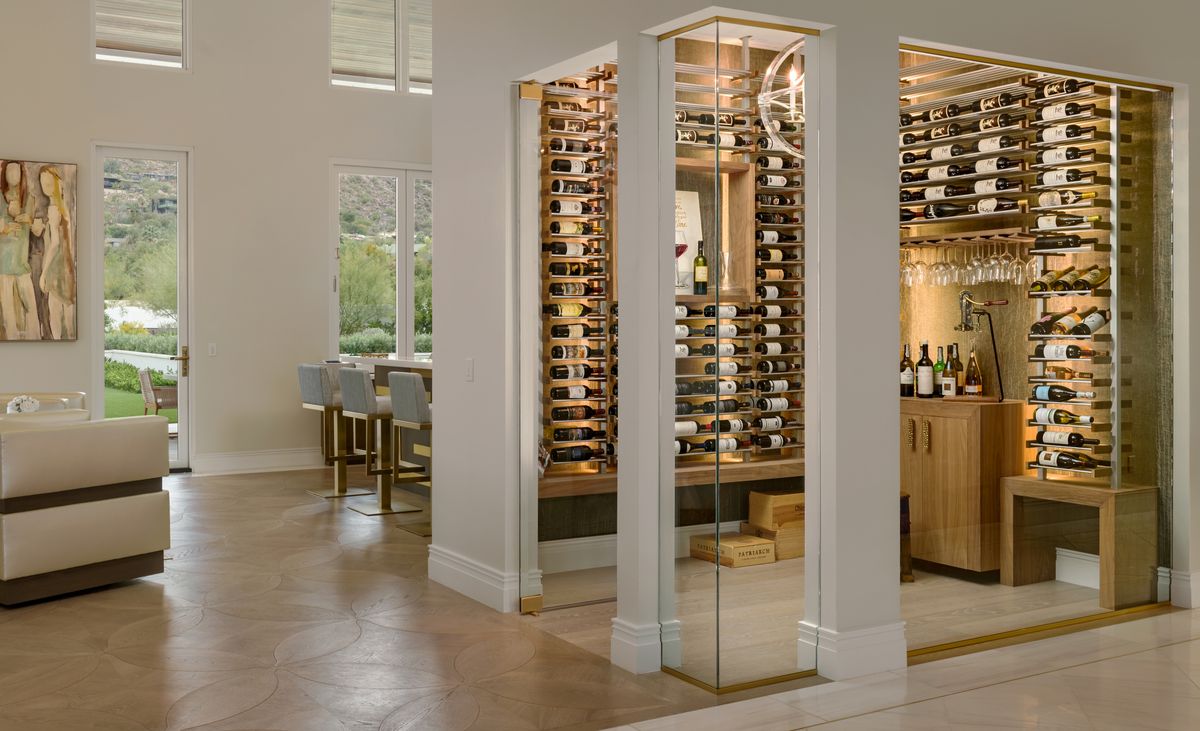

For wine enthusiasts and luxury homeowners alike, the appeal of a secret wine cellar is unmistakable. Whether it’s a secret wine cellar hidden behind a bookcase, an underground wine cellar accessible by a spiral staircase, or a hidden wine cellar beneath the floor, these rooms give more than simply storage; they provide an experience. Hidden wine cellars are a sought-after feature in luxury homes, combining refinement, security, and a sense of mystery. So, here is a comprehensive overview to build a hidden wine room, from planning to construction.
What is the definition of a hidden or secret wine cellar?
A hidden wine cellar, often referred to as a secret wine cellar or disguised wine cellar, is intended to be unobtrusive or completely undetectable to the casual observer. Unlike traditional, openly exhibited wine storage, these cellars are purposely hidden, often only accessible through a hidden door, trap door, or secret corridor. Some are designed as underground wine cellars, while others are artfully blended into disused areas of the property.
The attractiveness of a secret wine cellar stems from the mix of protection, exclusivity, and the thrill of discovery. For many, the travel to the wine is as enjoyable as the wine itself.
Popular Access Methods Include Trap Doors, Spiral Staircases, And Secret Entrances
- Wine Cellar With Trap Door
A wine cellar with a trap door provides both functionality and drama. The trap door can be smoothly blended into the floor, making the entrance virtually barely noticeable. Trap door wine storage is an ideal option for those with limited space or those who want ultimate privacy.
- Spiral Staircase Wine Cellar
Spiral staircases in secret wine cellars are both aesthetically pleasing and practical. Because it provides simple access without taking up a lot of floor space, the spiral form is perfect for underground wine cellars. Additionally, it gives any space a striking focal point.
- Wine Cellar Secret Entrance
You can conceal the entrance to your wine cellar using hidden doors like bookcases, mirrored panels, or even bogus cabinets. These elements give your house a speakeasy-style wine lounge atmosphere while also protecting your collection.
Organizing the Location and Design of Your Hidden Wine Cellar
Location is crucial when thinking about how to construct a secret wine cellar. Here are a few well-liked choices:
- Wine Cellar Under Floor- One creative idea to make use of unwanted space is to install a wine cellar beneath the floor. This method is particularly well-liked in pantries, kitchens, and dining areas where a trap door can offer quick and covert access.
- Basement or Underground Wine Cellar- The cold, steady climate that basements naturally provide is perfect for preserving wine. It is possible to add tasting rooms or even a complete speakeasy-style wine room to a underground wine cellar. Uncertain about the ideal location? Check out our comparison of closet and basement wine cellars.
- Unused Rooms or Closets- Creating a custom-built secret wine cellar out of a huge closet or underused space is a great way to add elegance and value to your house. Learn how to turn a pantry into a wine cellar for an inventive use of space if you have an extra pantry.
When designing the layout, take into account the following:
- Future expansion and capacity
- Security and accessibility
- Integration with the architectural style of your house
- Our top-rated wine cellar cooling systems will help you make a decision if you’re unsure about which cooling system is ideal for your area.
When designing the layout, take into account the following:
- Future expansion and capacity
- Security and accessibility
- Integration with the architectural style of your house
- Our top-rated wine cellar cooling systems will help you make a decision if you’re unsure about which cooling system is ideal for your area.

Comments are closed.